
Applications

Imagine what becomes possible when the surface is the energy system

SolarPWRD begins with the material already present in a building, vehicle, product or garment and asks what additional functions it could perform.

Application landscape

All surfaces ready for active materials

The platform is most compelling where conventional energy equipment is too rigid, heavy, visible, separate or space-intensive.

Built environment

Buildings and infrastructure

Energy-generating roofs and facades, embedded storage, surface heating, cooling, deicing and architectural illumination.
Mobility

Vehicles and transportation

Active exterior surfaces, light capture beneath compatible paint systems, climate-control components and integrated lighting.
Wearables

Textiles and clothing

Functional material woven into fabrics to heat or cool the wearer in personal, protective, medical and demanding environments.
Industry

Industrial thermal systems

Localized heat, cooling, deicing and distributed power for production equipment, transport systems and constrained spaces.
Autonomous systems

Remote and portable products

Generation and storage integrated directly into devices that need greater energy autonomy and fewer external components.
Designed environments

Lighting and smart surfaces

Flexible illumination for architecture, vehicle interiors, electronics, wayfinding, branded spaces and industrial equipment.

Multi-function building envelopes

One facade. Several energy functions.

A multi-function facade module can combine a light-transmissive architectural finish with printed solar generation, embedded energy storage and heating or anti-icing layers. The result is a building surface designed to participate in the energy system while preserving its architectural role.
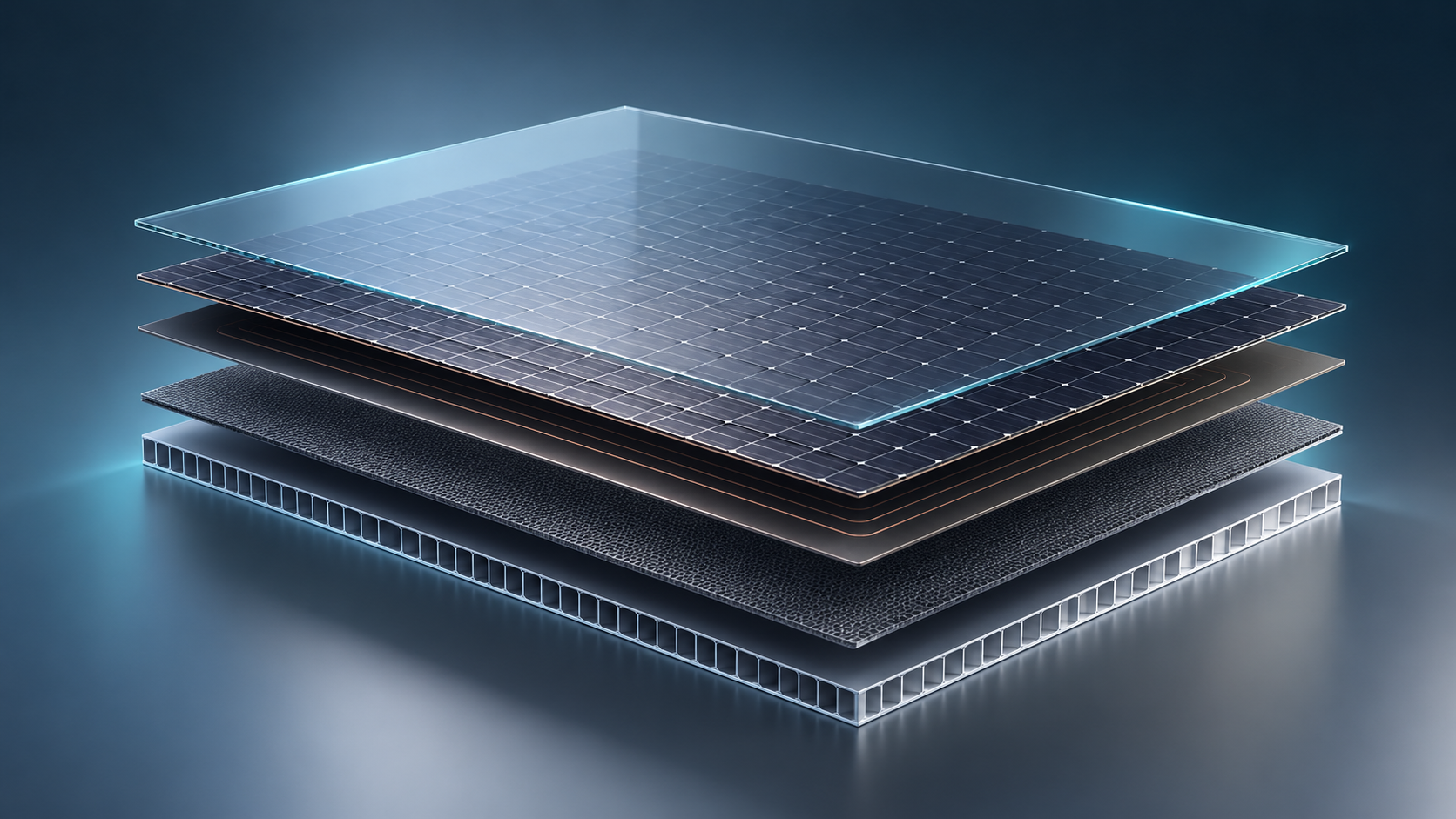
Exploded illustration of a multi-function facade module with five integrated layers
Illustrative layer architecture
  1. 01

    Architectural finish

    Printed aesthetic coating with a light-transmissive surface and transparent sealing.

  2. 02

    Solar generation

    Printed active solar coating integrated into the building envelope.

  3. 03

    Thermal management

    Heating and anti-icing layer for cold-weather operation.

  4. 04

    Embedded storage

    Printed battery coating positioned close to generation and use.

  5. 05

    Structural substrate

    Back plate using a lightweight or recycled honeycomb construction.

GenerateStoreHeatAnti-ice

Illustrative concept architecture. Final layer composition, performance and certification depend on product configuration, materials and validation.

SolarPWRD Buildings

Every elevation can become productive

Traditional solar design begins by finding a suitable roof or field. SolarPWRD expands the available canvas to facades, glazing systems, exterior materials and interior energy surfaces.

A building can combine generation with storage, heating, cooling and illumination. The result is a more integrated relationship between architecture and energy.

  • Produce more within the site boundary
    Use vertical and nontraditional surfaces where roof area is limited.
  • Reduce separate equipment
    Combine functions within materials already specified for the building.
  • Design for local conditions
    Tune the solution for climate, orientation, appearance and operating needs.
  • Exterior energy harvesting
    Active material can follow the vehicle body and continue capturing light beneath compatible painted finishes.
  • Cabin temperature control
    Heating and cooling can be integrated into seats, panels and interior materials.
  • Integrated light
    Thin illumination supports interiors, safety, signalling and brand expression.

SolarPWRD Mobility

Let the vehicle body participate in the energy system

Mobility applications are constrained by weight, aerodynamics, appearance and limited horizontal area. A conformable active layer can use the body itself without adding the visual language of a roof-mounted panel.

The same platform can also support thermal management and light, creating several opportunities within one vehicle architecture.

SolarPWRD Textiles

Clothing that responds to the person and the environment

Perovskite-based functional material can be incorporated into textiles to support wearable heating or cooling. The garment becomes part of the thermal system rather than relying entirely on the surrounding room or vehicle.

Potential uses include personal comfort, protective equipment, outdoor work, medicine, emergency response and extreme environments.

01

Personal comfort

Localized warmth or cooling where the wearer needs it
02

Protective systems

Thermal support for demanding work environments
03

Medical and recovery

Controlled temperature in application-specific garments

Choosing where to begin

A technology up to any challenge

SolarPWRD creates the most immediate value where an existing solution is limited by space, shape, weight, temperature, integration or the need for separate components.

Limited surface area

High output density matters when every square metre must work harder.

Complex geometry

Flexible or coatable materials can follow forms that cannot accept rigid panels.

Multiple functions

The strongest opportunity may combine electricity, storage, thermal control or light.

Bring us the challenge

Start with one surface worth transforming

Describe the product, structure, environment and incumbent technology. A focused discussion can identify which SolarPWRD capability deserves a closer technical review.